
Trichophyton mentagrophytes genotype VII (TMVII, said as “T-M seven”) is a fungal infection. It is often spread through sex and other intimate skin-to-skin contact. It is a different version of the fungus that causes a ringworm rash.
TMVII has been spreading in Europe and in Southeast Asia. It was first detected in the United States in 2024. There have been several cases of TMVII reported in the U.S. since then. Washington detected its first case in 2026.
TMVII is a new infection and information may change as we learn more.
How TMVII Spreads
TMVII is spread through direct skin-to-skin contact with the rash. This includes direct contact during sex and other intimate acts. TMVII can also spread through shared items such as bedding, clothing, sex toys, or razors.
The rash can also spread throughout the body of someone who has TMVII.
The rash does not spread during:
- Brief interaction between people who do not have physical contact.
- Health care visits when protective equipment, like gloves, is used.
Some fungal infections can affect pets. It is unclear whether TMVII can spread to pets. People with TMVII should monitor and consult with a veterinarian if they observe hair loss or irritated skin on their pets.
Symptoms of TMVII

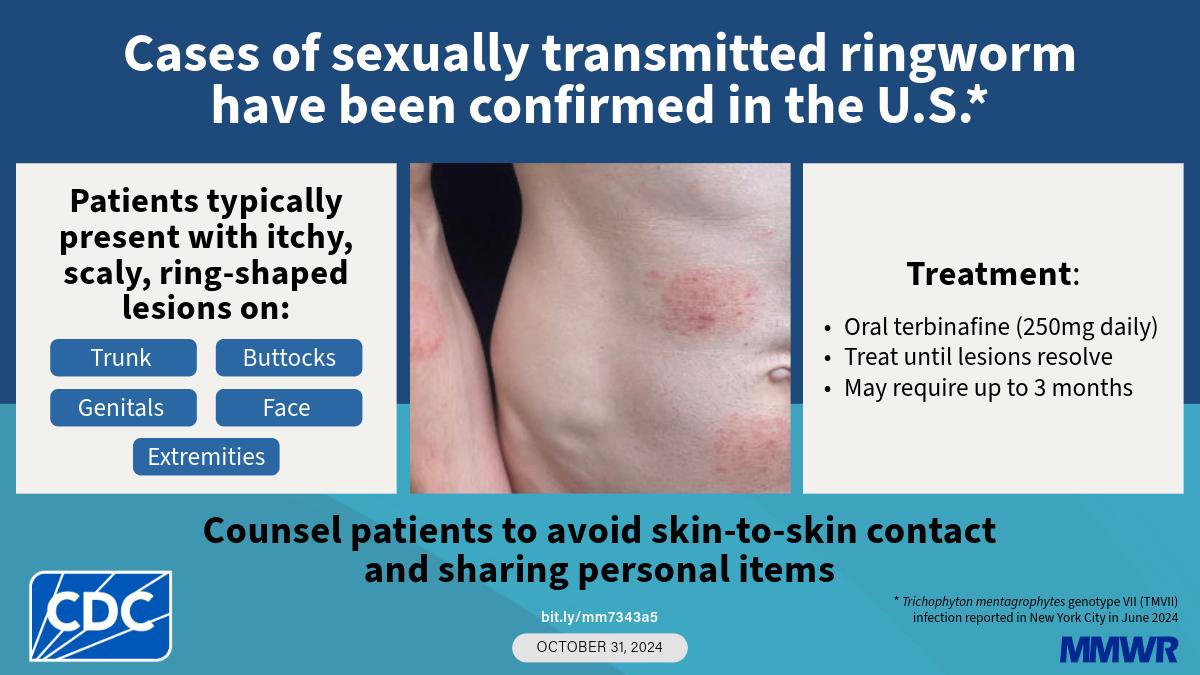
TMVII causes a ringworm rash. The rash looks like a round, coin-shaped patch. The rash might be itchy and painful, especially in sensitive areas. TMVII differs from common ringworm because it usually affects areas where people have sexual contact like the genitals, buttocks, around the anus, pubic area, and the face. It can also appear on other parts of the body like the chest, back, stomach, arms, and legs.
Complications from TMVII are rare. Some people might develop bacterial infections, which may require antibiotics. Some people may develop scars if TMVII is left untreated.
People Most at Risk
Anyone who is sexually active can get TMVII, and risk increases with more sexual partners.
So far in the U.S., TMVII has most often been found within the sexual networks of gay, bisexual, and other men who have sex with men. TMVII has also been detected in heterosexual (straight) sexual networks.
How to Prevent TMVII
To protect yourself and others from TMVII, we recommend the following:
- Avoid skin-to-skin contact, including sexual contact, with people who have an unexplained rash.
- Limit sexual activity if your sexual partners or people you’re in close contact with have a new rash.
- Talk with your partner if they have an active skin condition and encourage them to talk with a health care provider.
If You Have Symptoms of TMVII
- Get tested.
- Cover your rash.
- Avoid direct skin-to-skin contact with others.
- Do not share items like bedding, clothing, razors, and sex toys.
If You've Been Diagnosed with TMVII
- Avoid skin-to-skin contact until the rash has fully healed.
- Do not have sexual or intimate contact with partners until the rash has fully healed.
- Cover your rash with bandages or clothing.
- Tell your sexual partners to seek medical care if they develop a new rash.
- Do not share items like bedding, clothing, razors, and sex toys.
- Wash your hands with soap after touching parts of your body with a TMVII rash. The rash can spread if you touch or scratch the affected area and then touch other parts of your body.
- Clean any shared items at home or other spaces (like the gym or workplace) with common disinfectants, like bleach, or disinfectants with benzalkonium chloride.
- Wash clothing, towels, bedding, and other shared linens on high heat with laundry detergent.
- Take any prescribed oral antifungal medication exactly as prescribed, even if your rash has healed.
- Do not use over-the-counter steroid cream. It can make the rash worse.
- Watch for symptoms of ringworm in household pets. Talk to a veterinarian if your pet develops hair loss or red, irritated skin.
Testing for TMVII
If you think you might have TMVII, contact a health care provider. They can check to see if the rash might be TMVII. Testing for TMVII is not common. Some providers might scrape some of the flakes of your rash to run a test called a fungal culture. Some providers might swab the rash for a PCR test.
If you or your provider suspects TMVII infection, you can reach out to your local health department for assistance.
Treatment of TMVII
TMVII is only treatable with antifungal pills. Treatment usually lasts 6-8 weeks, but it can take up to 12 weeks. Continue to take the medicine even if your rash looks better.
Over-the-counter medications will not treat or cure TMVII.
How TMVII is Different Than Common Ringworm Infections
| TMVII | Common Ringworm |
|---|---|
| Usually affects areas where people have sexual or intimate skin-to-skin contact. | Usually affects the scalp, skin, or nails. Also causes infections like “athlete’s foot” and “jock itch.” |
| Can be treated only with oral antifungal pills prescribed by a doctor. | Can be treated with over-the-counter medications, including creams. |
| Symptoms can be more severe itching and pain. | Symptoms are usually mild itching. |
Resources
For the Public
TMVII: What is it and what do I need to know? (PDF)
TMVII: A New Type of Ringworm Infection, CDC
For Health Care Providers
Clinician Brief: Emerging Ringworm, CDC
TMVII Social Media Graphic, CDC (PNG)
National Coalition of STD Directors (NCSD) Dermatophyte Summary (PDF)
Trichophyton mentagrophytes genotype VII, American Academy of Dermatology